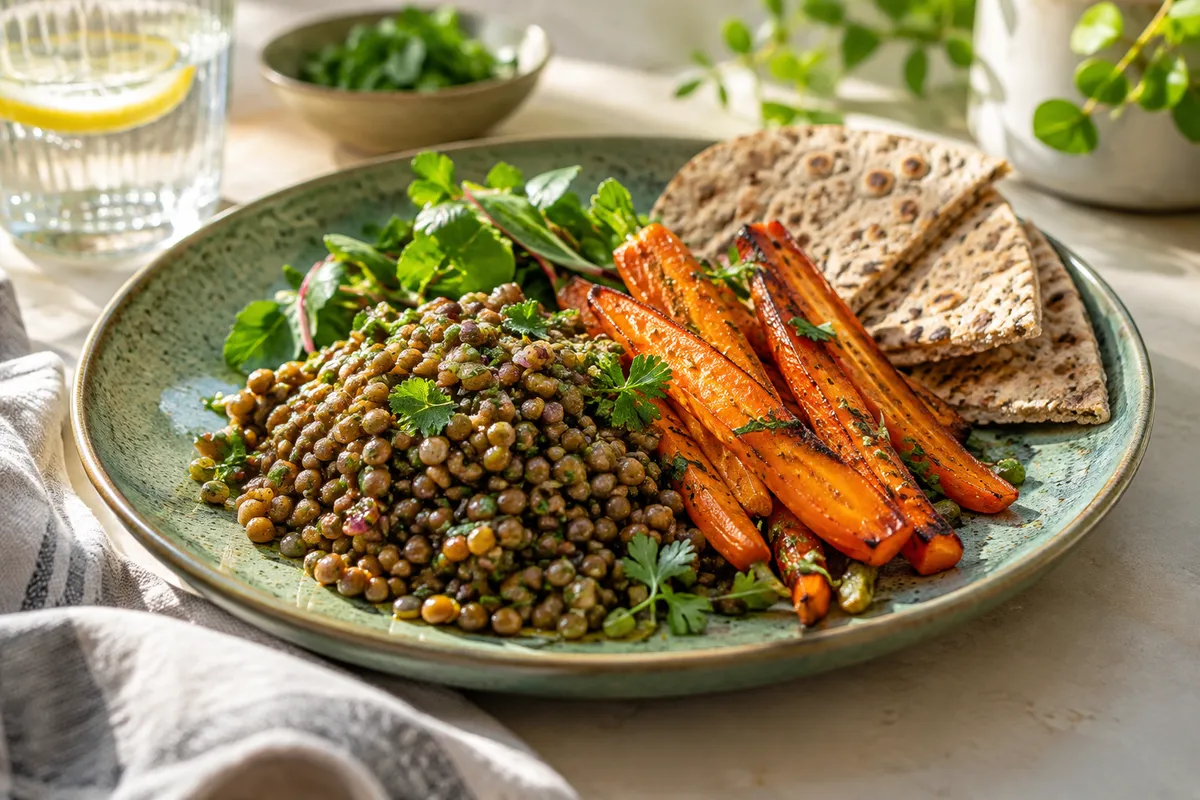
Food preparation and everyday movement are easier to sustain when they fit the life you actually have. Trying to copy an idealised mountain routine is less useful than arranging a short walk, a regular meal and one straightforward dish in an ordinary week. The following food ideas are contemporary suggestions. They are not presented as authenticated regional recipes or as a way to guarantee longevity.
Two modern meals and a simple breakfast
For a lentil bowl, cook lentils according to the pack and serve with cooked vegetables and a suitable grain. Season with herbs, lemon or spices you enjoy. A tray bake can combine vegetables with chickpeas or another suitable protein, served with potatoes or bread. At breakfast, oats with a suitable milk or alternative and fruit provide an ordinary starting point. Adjust the meal to appetite rather than treating a small photographed bowl as a prescribed portion. Check ingredients for allergens and individual suitability.
Use movement as its own useful habit
A short walk or another activity you enjoy can fit around daily tasks. Build from your current ability rather than assuming a new diet allows sudden intense exercise. NHS activity guidance provides a general framework, while medical conditions or a long inactive period may need individual advice. Movement is not a punishment for eating, and food does not have to be earned. Choose an activity and time that are realistic enough to repeat. A manageable routine can include rest and days when plans change.
A practical example
You might prepare a lentil soup for a busy evening and take a brief walk during a daylight break on another day. That is a contemporary routine, not a claim to reproduce life in Hunza. If walking is not suitable, choose an appropriate alternative with professional input when needed. The useful habit is the one that fits.
Try it this week
Choose one meal idea and one small activity for the coming week. Put both at times when they can realistically happen. Keep the meal familiar enough to make without a special shop and the movement appropriate to your circumstances. At the end of the week, ask which part was easy to repeat and which needs changing.
- Are the recipes clearly modern examples?
- Does the activity match my current ability?
- Can I repeat the routine without an elaborate setup?
Keep the interpretation clear
The word inspired is important here. These meal ideas are a contemporary interpretation for ordinary kitchens, not documentation of what every person in Hunza eats or has eaten historically. A named region does not provide a shortcut around nutrition, safety or personal circumstances. You can borrow a preference for simple meals without accepting longevity stories, restricting entire food groups or buying products marketed as ancient secrets.
A varied diet can look different in different households. Check suitability if you have allergies, digestive conditions, pregnancy needs or an existing nutrition plan. If a more restrictive approach leaves you tired, hungry or anxious about food, seek help with a workable alternative rather than interpreting those difficulties as a required cleansing stage.
Keep the part that helps
After trying a change, judge it by a practical question: did it make meals easier, more enjoyable or more varied? You do not have to continue an inconvenient habit to prove commitment to a named diet. Keep a useful recipe, change the ingredient you dislike and leave room for your existing routine.
If cost is the obstacle, look for a familiar substitute with the same job in the meal. If preparation is the obstacle, use a simpler method. If the obstacle is a medical concern, get appropriate advice rather than adding more restrictions. A flexible approach can improve everyday decisions without making a promise about health outcomes.
Sources and further reading
- NHS: the Eatwell Guide
- NHS: increasing fibre
- EFSA: apricot kernels and cyanide risk
- NHS: adult physical activity guidance
Keep exploring
- Hunza diet for beginners: a modern approach without longevity promises
- Hunza-inspired diet nutrition: plant foods, protein and balance
- A flexible Hunza-inspired meal plan for a UK kitchen
- Hunza-inspired shopping and meal prep: keep it ordinary
- Hunza diet longevity claims and apricot-kernel safety
Keep exploring the practical questions.
Explore the guides