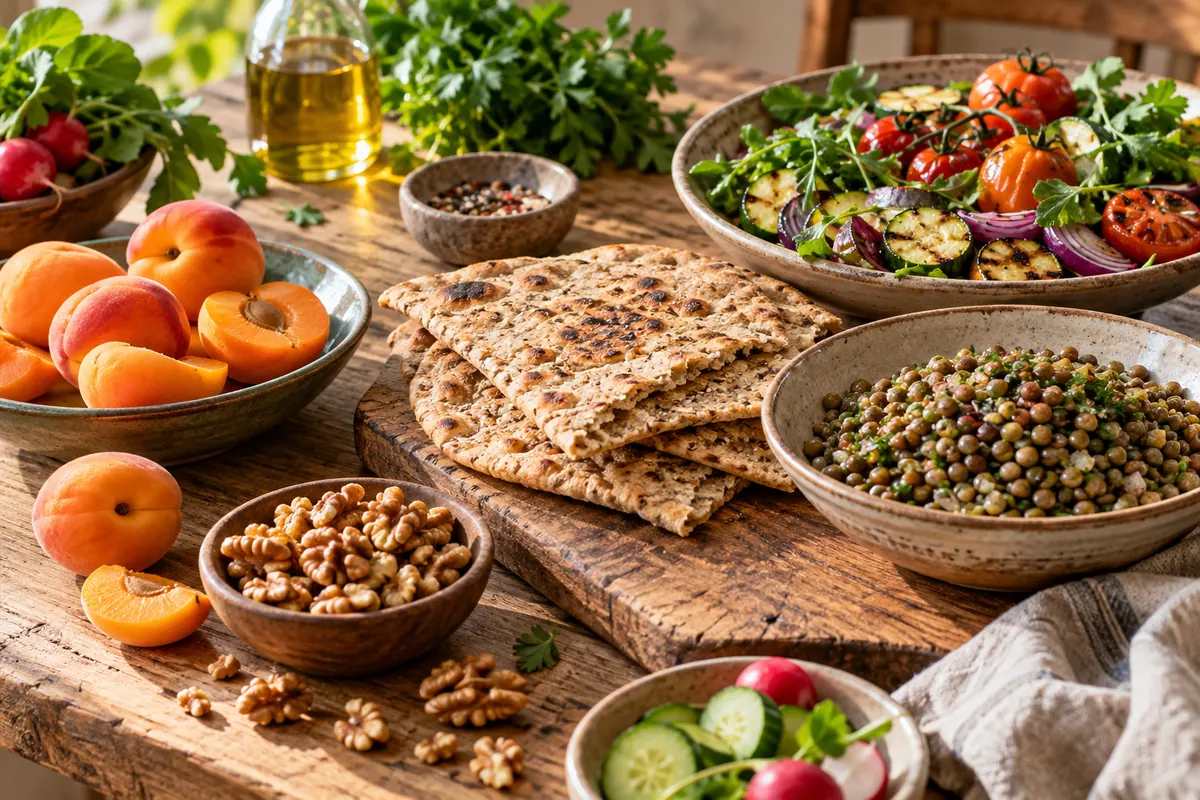
A plant-focused diet still needs nutrition planning. A list of grains, fruit and vegetables may sound wholesome while missing a dependable protein or calcium source. The name Hunza does not answer those questions. Begin with the jobs different foods do across the day, then choose ingredients that suit your routine. You do not need a precise ancestral menu to recognise whether meals are substantial and varied.
Make protein and calcium visible
Beans, lentils and suitable soy foods can contribute to protein planning; eggs and dairy are options if you eat them. Calcium may come from dairy or appropriately fortified alternatives, among other foods. Check labels when relying on fortification. A creamy-looking plant product is not automatically equivalent to a dairy product in protein or calcium. If you choose a fully vegan pattern, reliable vitamin B12 planning also matters. Removing foods without considering replacements is a less useful approach than building a varied menu deliberately.
Increase plant variety gradually
Try different vegetables, grains and pulses according to taste and availability. If your current diet is low in fibre, gradual changes may be more comfortable than switching abruptly to very large bean and wholegrain portions. Pay attention to how meals feel without diagnosing every digestive change yourself. A diet based entirely on a few celebrated ingredients can become monotonous and restrictive. Ordinary foods such as oats, potatoes, frozen vegetables and tinned pulses can be useful; there is no requirement to buy expensive imports.
A practical example
Oats with suitable milk or an alternative, lentil soup with bread and a dinner containing vegetables plus a substantial protein food show a practical meal structure. The actual quantities depend on the person. This is a modern example, not a historical claim or a prescription for everyone who searches for Hunza diet.
Try it this week
Write a typical day’s meals and name the main protein and calcium sources. If you cannot identify them, add suitable foods before introducing more restrictions. Check the labels of plant-based products you buy. Ask a registered dietitian about individual concerns instead of assuming that a named eating pattern supplies all nutrients by definition.
- Where do protein and calcium come from?
- Have I checked relevant fortified-food labels?
- Am I increasing fibre in a manageable way?
Keep the interpretation clear
The word inspired is important here. These meal ideas are a contemporary interpretation for ordinary kitchens, not documentation of what every person in Hunza eats or has eaten historically. A named region does not provide a shortcut around nutrition, safety or personal circumstances. You can borrow a preference for simple meals without accepting longevity stories, restricting entire food groups or buying products marketed as ancient secrets.
A varied diet can look different in different households. Check suitability if you have allergies, digestive conditions, pregnancy needs or an existing nutrition plan. If a more restrictive approach leaves you tired, hungry or anxious about food, seek help with a workable alternative rather than interpreting those difficulties as a required cleansing stage.
Keep the part that helps
After trying a change, judge it by a practical question: did it make meals easier, more enjoyable or more varied? You do not have to continue an inconvenient habit to prove commitment to a named diet. Keep a useful recipe, change the ingredient you dislike and leave room for your existing routine.
If cost is the obstacle, look for a familiar substitute with the same job in the meal. If preparation is the obstacle, use a simpler method. If the obstacle is a medical concern, get appropriate advice rather than adding more restrictions. A flexible approach can improve everyday decisions without making a promise about health outcomes.
Sources and further reading
- NHS: the Eatwell Guide
- NHS: increasing fibre
- EFSA: apricot kernels and cyanide risk
- NHS: adult physical activity guidance
Keep exploring
- Hunza diet for beginners: a modern approach without longevity promises
- A flexible Hunza-inspired meal plan for a UK kitchen
- Hunza-inspired shopping and meal prep: keep it ordinary
- Hunza diet longevity claims and apricot-kernel safety
- Hunza-inspired recipes and lifestyle: small habits that fit your week
Keep exploring the practical questions.
Explore the guides